


Titulo original «The Twelves Healers and Other Remedies»
Ésta es la publicación en la que el Dr. Bach describe los 38 remedios, clasificados por primera vez en siete grupos. La primera versión apareció en 1933 cuando había descubierto los 12 primeros remedios (curadores). Más tarde, en ese mismo año, publica un escrito con los 12 curadores y los 4 primeros ayudantes. En 1934 escribe los 12 remedios y los 7 ayudantes, para finalmente en 1936 dejarnos este escrito una vez descubiertas las 19 últimas esencias que el propio Dr. Bach calificó de "más espiritualizadas". En este escrito el sistema queda estructurado, como se ha comentado, en siete grupos y para estudiar el sistema desde la estructura de los "12 curadores + 7 ayudantes + 19 últimas" es necesario revisar los escritos anteriores.
El presente Escrito fue la última y definitiva descripción de las Flores de Bach que, su descubridor el Dr. Edward Bach, quiso dejarnos. Se ha escrito mucho sobre las flores de Bach (más de un centenar de libros en castellano), y a veces el lector, el interesado o el terapeuta floral puede perderse en esta información, en la mayor parte de los casos muy valiosa; por lo que a menudo es muy enriquecedor retornar a la fuente original.
Nota: en la descripción de los remedios se mantiene la versión inglesa escrita por el Dr. Bach, además de la versión traducida al castellano, véanse las fuentes al final del documento
C. Almansa
Este sistema de tratamiento es el más perfecto que se le ha ofrecido a la humanidad desde tiempos inmemoriales. Tiene el poder de curar las enfermedades; y por ser sencillo, puede utilizarse en casa.
Su sencillez precisamente, unida a sus efectos de curación de todo, hacen que sea maravilloso.
No se requiere ciencia alguna, ni conocimiento previos, aparte de los sencillos métodos que aquí se describen; y los que más beneficios conseguirán de este regalo enviado por Dios serán aquellos que lo conserven tan puro como es: sin ciencia, sin teorías pues todo en la naturaleza es muy simple.
Este sistema de curación, que se nos ha revelado divinamente, demuestra que nuestros temores, nuestras preocupaciones, nuestras ansiedades y demás son los que abren la puerta a la invasión de la enfermedad. De este modo, tratando nuestros temores, preocupaciones, inquietudes y demás, no sólo nos veremos libres de la enfermedad, sino que, además, las hierbas que se nos han dado por Obra y Gracia del Creador de todas las cosas, aparte de eso eliminarán nuestros temores e inquietudes, y nos dejarán más felices y satisfechos.
Como las hierbas curan nuestros temores, nuestras ansiedades, nuestras preocupaciones, nuestros defectos y nuestros fallos, ellas son las que debemos procurarnos, y entonces la enfermedad, sea la que sea, desaparecerá de nuestro cuerpo.
Poco más hay que añadir, pues la mente abierta a la comprensión ya sabe todo esto, y con esto basta para los que tienen las mentes despiertas, no confundidas por las tendencias de la ciencia, para que utilicen estos dones de Dios para alivio y beneficio de quienes les rodean.
Así pues, debajo de las enfermedades subyacen nuestros temores, nuestras ansiedades, nuestra concupiscencia, nuestros gustos y fobias. Descubramos cuáles son y curémoslos, y al curarlos desaparecerá la enfermedad que sufrimos.
Desde tiempos inmemoriales se sabe que se han puesto en la naturaleza medios providenciales de prevención y curación de las enfermedades, con hierbas, plantas y árboles divinamente enriquecidos. Los remedios de la naturaleza que se dan en este libro han demostrado contar con una bendición que los sitúa por encima de los demás en su labor de merced; y han demostrado tener poder para curar todo tipo de enfermedades y padecimientos.
Al tratar los casos con estos remedios, no se tiene en cuenta la naturaleza de la enfermedad; se trata al individuo, y al mejorar éste se va su enfermedad, expulsada al mejorar la salud.
Todos sabemos que las mismas enfermedades pueden tener diferentes efectos sobre diferentes personas; son los efectos los que hay que tratar, porque ellos nos guían hacia la verdadera causa. Al ser la mente la parte más delicada y sensible del cuerpo, en ella aparecen la génesis y el curso de la enfermedad más claramente que en el resto del cuerpo, por lo que se utiliza la observación de la mente como guía para conocer qué remedio o remedios se requieren.
En la enfermedad se da un cambio de humor respecto a la vida diaria, y las personas observadoras pueden notar ese cambio incluso antes, y a veces mucho antes de que aparezca la enfermedad, y con un tratamiento se puede lograr prevenir la enfermedad. Cuando ésta lleva manifestándose cierto tiempo, también el humor del paciente nos indicará cuál es el remedio correcto.
No nos fijemos en la enfermedad, pensemos sólo en cómo ve la vida el enfermo.
Se describen sencillamente treinta y ocho estados diferentes: no debe resultar difícil, para uno mismo o para otro, hallar aquel estado o aquellos estados que se dan en una persona, y de ese modo aplicar los necesarios remedios para que se efectúe la curación.
El alivio de los sufrimientos era tan cierto y tan benéfico, incluso cuando sólo había doce remedios, que se ha creído necesario ofrecer estos conocimientos al público, sin esperar al descubrimiento de los otros veintiséis que completan la serie. Los doce originales (curadores) se indican con asteriscos.
LOS 38 REMEDIOS situados en los 7 epígrafes siguientes:
Rock Rose*
The rescue remedy. The remedy of emergency for cases where there even appears no hope. In accident or sudden illness, or when the patient is very frightened or terrified or if the condition is serious enough to cause great fear to those around. If the patient is not conscious the lips may be moistened with the remedy. Other remedies in addition may also be required, as, for example, if there is unconsciousness, which is a deep, sleepy state, Clematis ; if there is torture, Agrimony, and so on.
Mimulus*
Fear of worldly things, illness, pain, accidents, poverty, of dark, of being alone, of misfortune. The fears of everyday life. These people quietly and secretly bear their dread, they do not freely speak of it to others.
Cherry Plum
Fear of the mind being over-strained, of reason giving way, of doing fearful and dreaded things, not wished and known wrong, yet there comes the thought and impulse to do them.
Aspen
Vague unknown fears, for which there can be given no explanation, no reason. Yet the patient may be terrified of something terrible going to happen, he knows not what. These vague unexplainable fears may haunt by night or day. Sufferers often are afraid to tell their trouble to others.
Red Chesnut
For those who find it difficult not to be anxious for other people. Often they have ceased to worry about themselves, but for those of whom they are fond they may suffer much, frequently anticipating that some unfortunate thing may happen to them.
Cerato*
Those who have not sufficient confidence in themselves to make their own decisions. They constantly seek advice from others, and are often misguided.
Scleranthus*
Those who suffer much from being unable to decide between two things, first one seeming right then the other. They are usually quiet people, and bear their difficulty alone, as they are not inclined to discuss it with others.
Gentian*
Those who are easily discouraged. They may be progressing well in illness, or in the affairs of their daily life, but any small delay or hindrance to progress causes doubt and soon disheartens them.
Gorse
Very great hopelessness, they have given up belief that more can be done for them. Under persuasion or to please others they may try different treatments, at the same time assuring those around that there is so little hope of relief.
Hornbeam
For those who feel that they have not sufficient strength, mentally or physically, to carry the burden of life placed upon them; the affairs of every day seem too much for them to accomplish, though they generally succeed in fulfilling their task. For those who believe that some part, of mind or body, needs to be strengthened before they can easily fulfil their work.
Wild Oat
Those who have ambitions to do something of prominence in life, who wish to have much experience, and to enjoy all that which is possible for them, to take life to the full. Their difficulty is to determine what occupation to follow; as although their ambitions are strong, they have no calling which appeals to them above all others. This may cause delay and dissatisfaction.
Clematis*
Those who are dreamy, drowsy, not fully awake, no great interest in life. Quiet people, not really happy in their present circumstances, living more in the future than in the present; living in hopes of happier times, when their ideals may come true. In illness some make little or no effort to get well, and in certain cases may even look forward to death, in the hope of better times; or maybe, meeting again some beloved one whom they have lost.
Honeysuckle
Those who live much in the past, perhaps a time of great happiness, or memories of a lost friend, or ambitions which have not come true. They do not expect further happiness such as they have had.
Wild Rose
Those who without apparently sufficient reason become resigned to all that happens, and just glide through life, take it as it is, without any effort to improve things and find some joy. They have surrendered to the struggle of life without complaint.
Olive
Those who have suffered much mentally or physically and are so exhausted and weary that they feel they have no more strength to make any effort. Daily life is hard work for them, without pleasure.
White Chestnut
For those who cannot prevent thoughts, ideas, arguments which they do not desire from entering their minds. Usually at such times when the interest of the moment is not strong enough to keep the mind full. Thoughts which worry and will remain, or if for a time thrown out, will return. They seem to circle round and round and cause mental torture. The presence of such unpleasant thoughts drives out peace and interferes with being able to think only of the work or pleasure of the day.
Mustard
Those who are liable to times of gloom, or even despair, as though a cold dark cloud overshadowed them and hid the light and the joy of life. It may not be possible to give any reason or explanation for such attacks. Under these conditions it is almost impossible to appear happy or cheerful.
Chestnut Bud
For those who do not take full advantage of observation and experience, and who take a longer time than others to learn the lessons of daily life. Whereas one experience would be enough for some, such people find it necessary to have more, sometimes several, before the lesson is learnt. Therefore, to their regret, they find themselves having to make the same error on different occasions when once would have been enough, or observation of others could have spared them even that one fault.
Water Violet*
For those who in health or illness like to be alone. Very quiet people, who move about without noise, speak little, and then gently. Very independent, capable and self-reliant. Almost free of the opinions of others. They are aloof, leave people alone and go their own way. Often clever and talented. Their peace and calmness is a blessing to those around.
Impatiens*
Those who are quick in thought and action and who wish all things to be done without hesitation or delay. When ill they are anxious for a hasty recovery. They find it very difficult to be patient with people who are slow, as they consider it wrong and a waste of time, and they will endeavour to make such people quicker in all ways. They often prefer to work and think alone, so that they can do everything at their own speed.
Heather
Those who are always seeking the companionship of anyone who may be available, as they find it necessary to discuss their own affairs with others, no matter whom it may be. They are very unhappy if they have to be alone for any length of time.
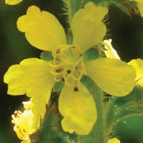
Agrimony*
The jovial, cheerful, humorous people who love peace and are distressed by argument or quarrel, to avoid which they will agree to give up much. Though generally they have troubles and are tormented and restless and worried in mind or in body, they hide their cares behind their humour and jesting and are considered very good friends to know. They often take alcohol or drugs in excess, to stimulate themselves and help themselves bear their trials with cheerfulness.
Centaury*
Kind, quiet, gentle people who are over-anxious to serve others. They overtax their strength in their endeavours. Their wish so grows upon them that they become more servants than willing helpers. Their good nature leads them to do more than their own share of work, and in so doing they may neglect their own particular mission in life./
Walnut
For those who have definite ideals and ambitions in life and are fulfilling them, but on rare occasions are tempted to be led away from their own ideas, aims and work by the enthusiasm, convictions or strong opinions of others. The remedy gives constancy and protection from outside influences.
Holly
For those who sometimes are attacked by thoughts of such kind as jealousy, envy, revenge, suspicion. For the different forms of vexation. Within themselves they may suffer much, often when there is no real cause for their unhappiness.
Larch
For those who do not consider themselves as good or capable as those around them, who expect failure, who feel that they will never be a success, and so do not venture or make a strong enough attempt to succeed.
Pine
For those who blame themselves. Even when successful they think that they could have done better, and are never content with their efforts or the results. They are hard-working and suffer much from the faults they attach to themselves. Sometimes if there is any mistake it is due to another, but they will claim responsibility even for that.
Elm
Those who are doing good work, are following the calling of their life and who hope to do something of importance, and this often for the benefit of humanity. At times there may be periods of depression when they feel that the task they have undertaken is too difficult, and not within the power of a human being.
Sweet Chestnut
For those moments which happen to some people when the mind or body feels as if it had borne to the uttermost limit of its endurance, and that now it must give way. When it seems there is nothing but destruction and annihilation left to face.
Star of Bethlehem
For those in great distress under conditions which for a time produce great unhappiness. The shock of serious news, the loss of some one dear, the fright following an accident, and such like. For those who for a time refuse to be consoled this remedy brings comfort.
Willow
For those who have suffered adversity or misfortune and find these difficult to accept, without complaint or resentment, as they judge life much by the success which it brings. They feel that they have not deserved so great a trial, that it was unjust, and they become embittered. They often take less interest and less activity in those things of life which they had previously enjoyed.
Oak
For those who are struggling and fighting strongly to get well, or in connection with the affairs of their daily life. They will go on trying one thing after another, though their case may seem hopeless. They will fight on. They are discontented with themselves if illness interferes with their duties or helping others. They are brave people, fighting against great difficulties, without loss of hope or effort.
Crab Apple
This is the remedy of cleansing. For those who feel as if they had something not quite clean about themselves. Often it is something of apparently little importance: in others there may be more serious disease which is almost disregarded compared to the one thing on which they concentrate. In both types they are anxious to be free from the one particular thing which is greatest in their minds and which seems so essential to them that it should be cured. They become despondent if treatment fails. Being a cleanser, this remedy purifies wounds if the patient has reason to believe that some poison has entered which must be drawn out.
Chicory*
Those who are very mindful of the needs of others; they tend to be over-full of care for children, relatives, friends, always finding something that should be put right. They are continually correcting what they consider wrong, and enjoy doing so. They desire that those for whom they care should be near them.
Vervain*
Those with fixed principles and ideas, which they are confident are right, and which they very rarely change. They have a great wish to convert all around them to their own views of life. They are strong of will and have much courage when they are convinced of those things that they wish to teach. In illness they struggle on long after many would have given up their duties.
Vine
Very capable people, certain of their own ability, confident of success. Being so assured, they think that it would be for the benefit of others if they could be persuaded to do things as they themselves do, or as they are certain is right. Even in illness they will direct their attendants. They may be of great value in emergency.
Beech
For those who feel the need to see more good and beauty in all that surrounds them. And, although much appears to be wrong, to have the ability to see the good growing within. So as to be able to be more tolerant, lenient and understanding of the different way each individual and all things are working to their own final perfection.
Rock Water
Those who are very strict in their way of living; they deny themselves many of the joys and pleasures of life because they consider it might interfere with their work. They are hard masters to themselves. They wish to be well and strong and active, and will do anything which they believe will keep them so. They hope to be examples which will appeal to others who may then follow their ideas and be better as a result.
Todos estos remedios son puros e inofensivos, no hay peligro de dar demasiado o con demasiada frecuencia, si bien basta con cantidades mínimas como dosis. Ni tampoco perjudicará un remedio si resulta no ser el indicado para el caso.
Para preparar el remedio, tomar un par de gotas del frasco y echarlas en una botellita (de un tamaño de 30 ml) prácticamente llena de agua; si tiene que durar algún tiempo, se puede añadir un poco de brandy como conservante.
Esta botellita se utiliza para administrar las dosis, y todo cuanto se requiere son unas gotitas, tomadas con un poco de agua, leche o cualquier vehículo apropiado.
En casos urgentes se pueden dar las dosis cada pocos minutos, hasta que se sienta mejoría; en casos graves, aproximadamente cada media hora; y en casos largos cada dos o tres horas, o con más o menos frecuencia según el paciente sienta necesidad.
En los pacientes inconscientes, humedézcanse los labios frecuentemente.
Siempre que exista dolor, rigidez, inflamación, o cualquier molestia local, habrá que aplicar además una loción. Échense unas cuantas gotas de la botella de la medicina en un cacharro con agua y empápese en esta mezcla un paño con el que se cubrirá la parte afectada; puede humedecerse de vez en cuando, siempre que se necesite.
A veces pueden resultar beneficiosas aspersiones o baños con agua en la que se habrán vertido unas gotas del remedio.
Los nombres ingleses y botánicos de los remedios son los siguientes:
Se utilizan dos métodos para preparar estos remedios.
Llenar con la más pura agua que se pueda conseguir, si es posible de algún manantial cercano, una bandeja de fino cristal.
Las flores de las plantas son recogidas y de inmediato se las hace flotar en la superficie del agua, hasta cubrirlas, y luego se dejan expuestas a la brillante luz del sol durante tres o cuatro horas, o menos tiempo si las flores muestran signos de decaimiento. Las flores son entonces cuidadosamente retiradas y se vierte el agua en frascos, llenándolos casi hasta la mitad. La mitad restante se completa con brandy para preservar el remedio. Éstos son frascos madres y no se utilizan para preparar las dosis. Luego se toman unas gotas y se traspasan a otro frasco, con el que luego se trata al paciente, de modo que los frascos madre contienen una gran provisión de remedio.
De este modo se preparan los siguientes remedios: Agrimony, Centaury, Cerato, Chicory, Clematis, Gentian, Gorse, Heather, Impatiens, Mimulus, Oak, Olive, Rock Rose, Rock Water, Scleranthus, Wild Oat, Vervain, Vine, Water Violet, White Chestnut.
Rock Water. Se sabe desde hace mucho tiempo que ciertos pozos o manantiales tienen el poder de curar a algunas personas, siendo muchos de estos pozos o manantiales muy renombrados por sus propiedades. Puede utilizarse cualquier pozo o manantial del que se sepa que ha tenido poderes curativos y que aún permanezcan en su estado natural, resguardado por los santuarios del hombre.
Los restantes remedios se preparan cociendo las flores tal y como se indica:
Los especimenes, como los antes descritos, son cocidos media hora en agua limpia y pura.
Se cuela el fluido resultante, se vierte en frascos y se llenan hasta la mitad, y luego, una vez fríos, se llena la otra mitad con brandy, para preservarlo.
Chestnut Bud. Para este remedio se cogen los brotes del castaño de indias, justo antes de que comiencen a echar hojas.
En otros casos las flores deberán ser utilizadas junto con pequeños trozos de pedúnculo o tallo y, cuando estén presentes, hojitas frescas.
Todos los remedios dados crecen naturalmente en Gran Bretañan, excepto Vine, Olive y Cerato, ya que son auténticos nativos de otros países, desde Europa central y meridional hasta el norte de la India y el Tibet.
(...) Y estemos siempre contentos y agradecidos de corazón al Gran Creador de todas las cosas, porque, en Su Amor por nosotros, puso en los campos las hierbas para la salud de todos.
FLOBANA, loreen lurrinak ikertzeko eta hedatzeko sortutako elkartea da. 2005eko uztailan sortu zen eta Nafarroako Gobernuan ofizialki erregistratuta dago (5.151 zbk.)
Elkarte honen helburua ez da irabazi-asmoa, Edward Bach doktorearen (Bachen loreak) lore terapia eta beste lore lurrinen sistemak ikertu eta hedatzea baizik.


 Las flores de Bach